
Inspiring Women
in History & Science
A slow-built archive of women whose work was dismissed, whose pain was minimized, and whose findings reshaped what we now understand about the body, the mind, and the long arc of healing — and the heavens above us.
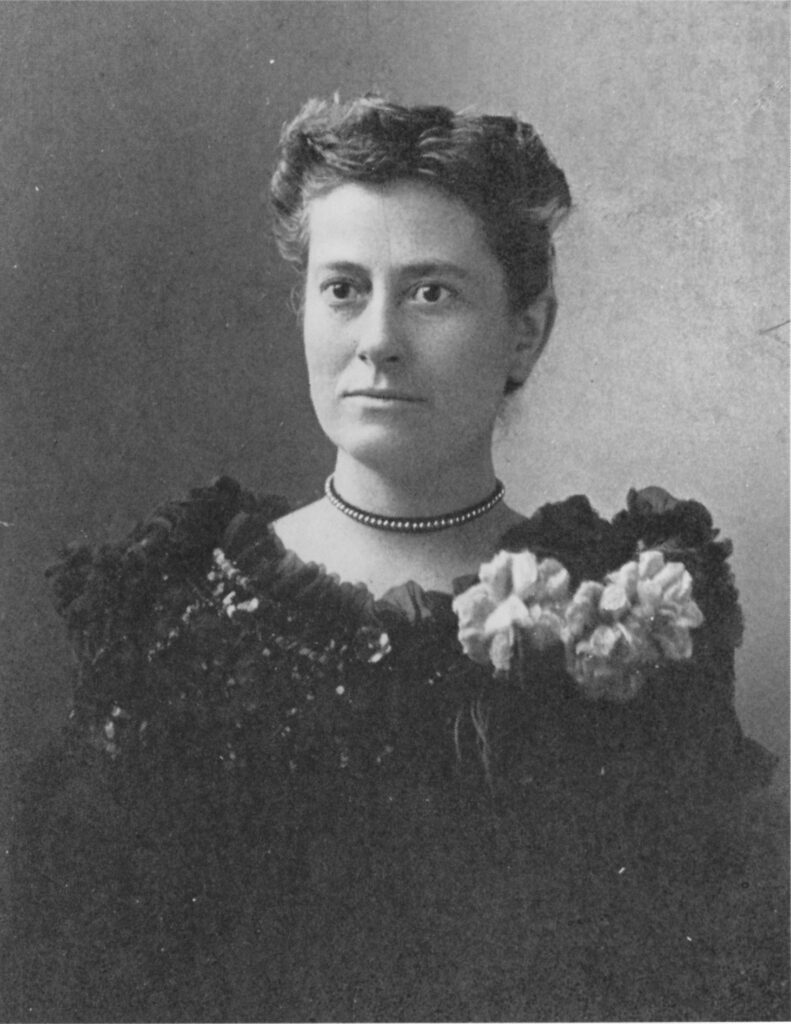
i.The maid who could do better
Williamina Paton Stevens was born in Dundee, Scotland in 1857 and trained as a teacher there before she was out of her teens. In 1877 she married a man named James Orr Fleming. A year later, the two of them sailed to America. He left. She was pregnant, alone, and broke in a Boston winter, with a child on the way and no income to speak of.
She took work as a housekeeper. The man who hired her was Edward Charles Pickering, director of the Harvard College Observatory. The story goes — and Harvard has never quite stopped telling it — that Pickering, frustrated with the men in his employ, declared his Scottish housekeeper could do their work better than they could. He brought her into the Observatory in 1881 to find out. He was not wrong.
Pickering told the men in his observatory that his Scottish housekeeper could do their work better than they could. He was right.
ii.The plates and the patience
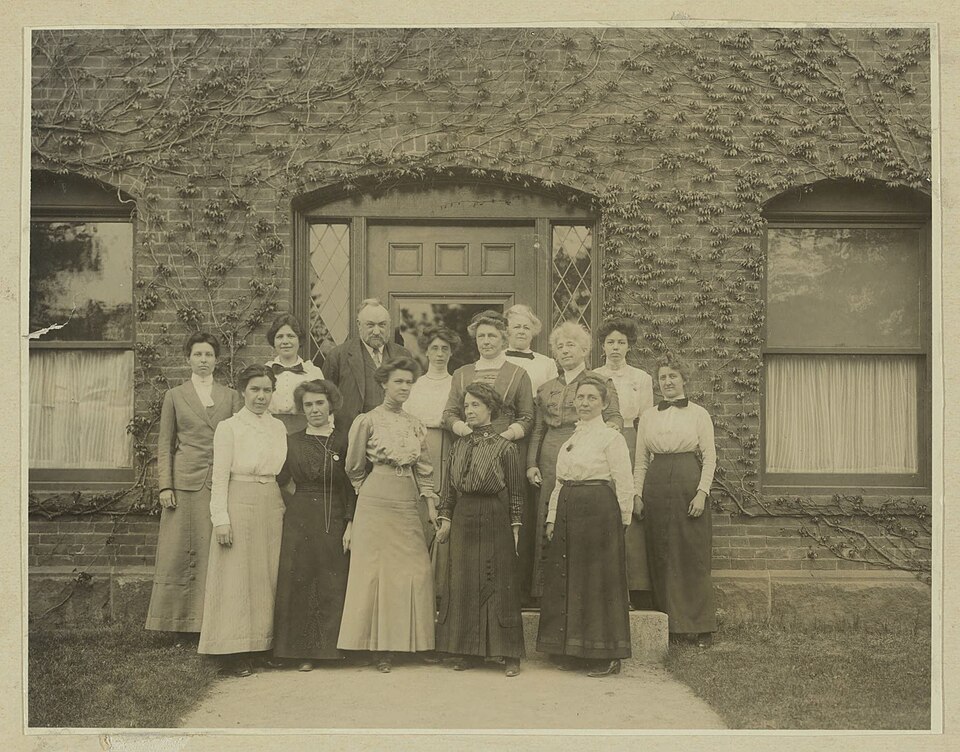
The Observatory in those years was producing photographs of the night sky on glass plates by the thousands — a great archive of starlight, immobilized on emulsion. Someone had to read them. Someone had to identify each star, measure its brightness, classify the spectrum of light it threw off, and write the result down. That someone, increasingly, was a small cohort of women Pickering had quietly assembled because their labour was cheaper than men’s. History calls them the Harvard Computers. Williamina Fleming ran the room.
She invented a system for sorting stars by the strength of the hydrogen lines in their spectra — a scheme of letters from A through Q that became the Pickering–Fleming classification, the foundation Annie Jump Cannon would later refine into the O–B–A–F–G–K–M sequence still taught in every astronomy course on earth. By the time the first Draper Catalogue of Stellar Spectra was published in 1890, more than ten thousand stars had passed through her hands. Over her career she would also identify 59 gaseous nebulae, 310 variable stars, and 10 novae.
She sorted starlight for a living. By the time she finished, more than ten thousand stars had been pulled out of the dark and given a name.
iii.The horse in the dust
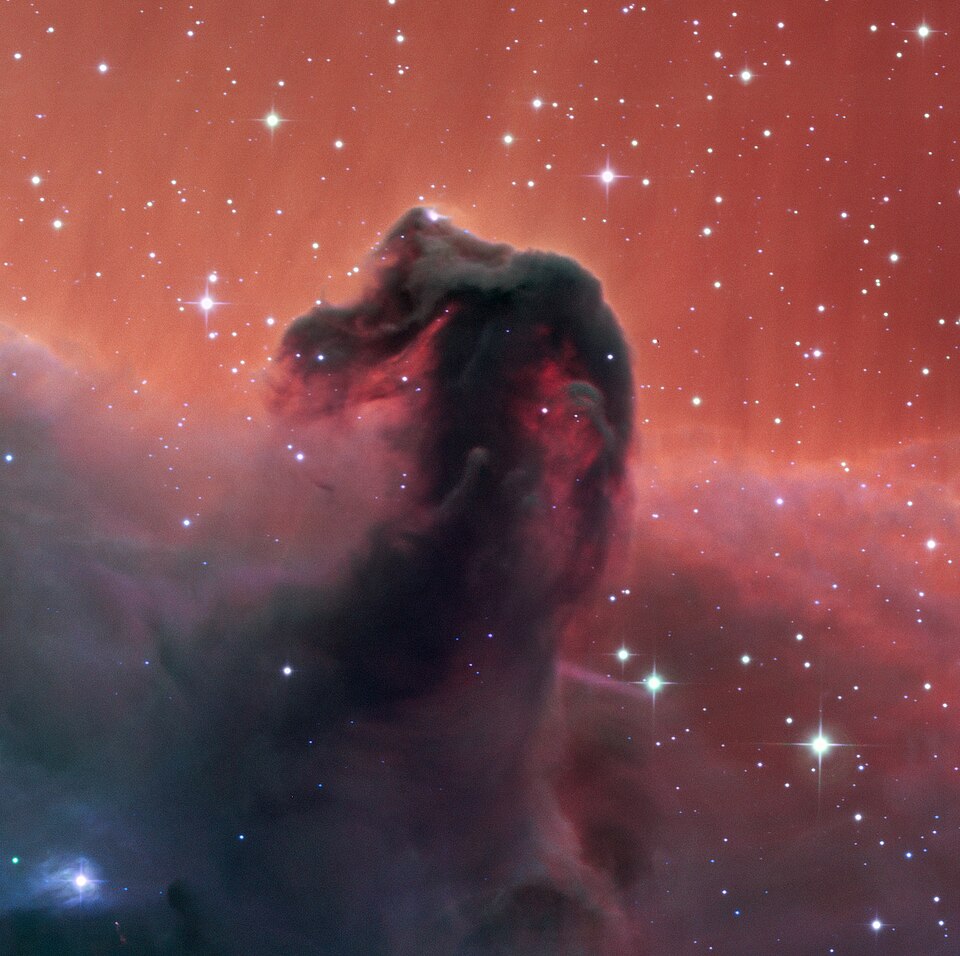
In 1888, examining a glass plate of the region around Alnitak — the easternmost star in Orion’s Belt — Fleming noticed a curious dark shape silhouetted against a band of glowing gas. It looked, unmistakably, like the head of a horse. She catalogued it. The discovery was published in Harvard’s records, and the object eventually became the Horsehead Nebula, one of the most photographed structures in the sky.
For decades after, the credit drifted. Some references attributed the find loosely to “Pickering,” some to “Harvard,” some to the male astronomer whose plate she had been reading. It took most of a century for her name to settle back where it belonged. Many of the Harvard Computers’ discoveries followed the same path — published under the Observatory’s masthead, recovered for their authors only in retrospect.
She found a horse-shaped shadow in the dust of Orion. For decades, the credit drifted away from her name.
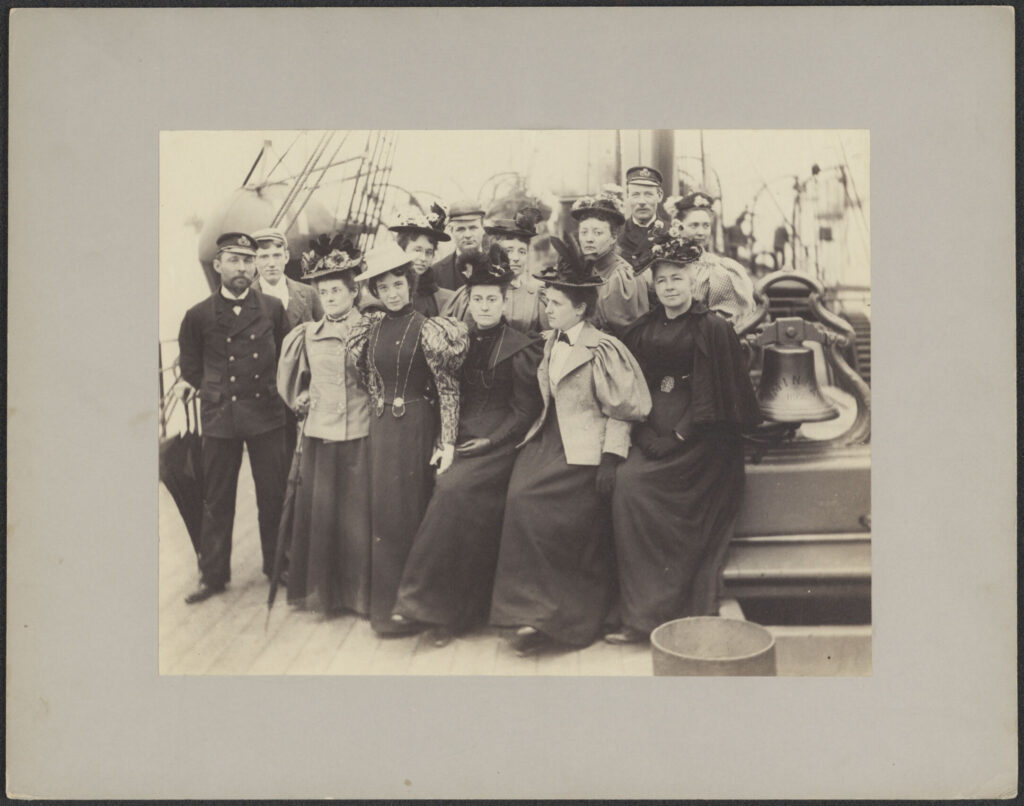
Photograph: Harvard College Observatory. Harvard University Archives, UAV 630.271 (173).
iv.The first woman with a Harvard title
In 1898, Harvard appointed her Curator of Astronomical Photographs — the first woman ever granted a Corporation title at the university. She kept the keys to the plate stacks and the women who worked them. In 1906 she was elected an honorary member of the Royal Astronomical Society of London — the first American woman to be admitted. The Astronomical Society of Mexico awarded her the Guadalupe Almendaro medal for her work on new stars. She published A Photographic Study of Variable Stars in 1907, and Spectra and Photographic Magnitudes of Stars in Standard Regions in 1911 — the year she died of pneumonia, at fifty-four.
Through all of it, she was paid less than the male janitors at the Observatory. She wrote about it in her journal more than once: the wage, the rooms, the hours, the weight of being the only woman in the building paid to think, and even then less than the men paid to sweep. She was right anyway. The system she built is still how we read the light of the stars.
Some women were told their pain was imaginary. Some were told their work was unscientific. Some were told to wait, to rest, to accept. They did the opposite — and the world is still catching up to them.