
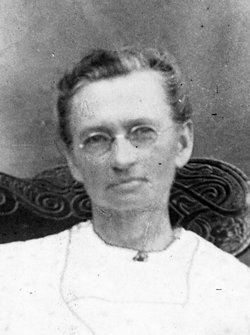
Inspiring Women
in History & Science
A slow-built archive of women whose work was dismissed, whose pain was minimized, and whose findings reshaped what we now understand about the body, the mind, and the long arc of healing. We begin with the woman who took fascia seriously decades before medicine was willing to look.
i.A scientist who would not be soothed
Ida Pauline Rolf earned her doctorate in biological chemistry from Columbia University in 1920 — a year when many women in the United States had only just won the vote, in a field that counted its women on one hand. She moved on to research at the Rockefeller Institute, publishing in organic chemistry and atomic physics. Her credentials were never the question. The question was what to do with a credentialed woman who would not stop asking why.
When chronic pain — her own, her sons’ — kept landing her in front of doctors who shrugged, prescribed rest, and quietly suggested the trouble might be in her head, she did what scientists do. She kept looking. She studied yoga, osteopathy, homeopathy, and the work of Korzybski and F.M. Alexander. She refused the diagnosis of psychosomatic — a word that, in the mid-twentieth century, did most of its real work as a polite dismissal of women.
She refused the diagnosis of psychosomatic — a word that did most of its real work as a polite dismissal of women.
ii.The tissue everyone walked past
She kept returning to one thing the textbooks of her era treated as inert: fascia. The dense, glistening connective tissue that wraps every muscle and organ, threading the body together as one continuous, force-transmitting web. To most physicians of the 1940s, fascia was packaging — something to cut through to reach the real anatomy. To Rolf, it was the anatomy.
She believed fascia could hold pattern. Could shape itself around old injury, chronic posture, repetitive stress, even grief. And she believed that if it could hold pattern, it could be re-patterned. Out of that belief came a method she eventually named Structural Integration — ten sessions, sequenced through the body’s fascial layers, working slowly and deeply to release what the tissue had been carrying. People who walked in with years of unexplained pain walked out taller, lighter, less guarded. Some of them cried on her table. Some of them changed shape.
To most physicians of her era, fascia was packaging. To Rolf, it was the anatomy.
iii.A PhD they called a quack
The medical establishment was not pleased. She had no MD. She talked about gravity and structure in language doctors found unscientific. And — perhaps most unforgivably — she was helping people whose conditions medicine had already filed under imaginary. To admit she was right was to admit they had been wrong about the patients, mostly women, they had been turning away for decades. So they did what institutions do when challenged from outside: they declined. They called her a quack. They called her work dangerous. They warned patients off.
She did not soften. She did not pursue their approval. She trained practitioners. She built an institute. She kept her hands on the tissue and let the results speak. She died in 1979, at eighty-three, just as fascia was beginning to surface in serious research literature. By the 2000s, fascial science had become a field of its own. Today, Rolf-trained practitioners work on six continents, and fascia is a word physical therapists, surgeons, and movement scientists use without flinching. She was, to put it plainly, right.
iv.Why we begin the series with her
At ArtfulDesign, we build for the woman whose pain was real before anyone agreed it was. Ida Rolf trusted what the body told her over what the institution told her. She gave the dismissed a structural explanation, a method, and a vocabulary. She insisted that tissue remembers — and that what is remembered can also be released.
Tissue remembers. And what is remembered can also be released.
That is the heartbeat of this brand. Begin with her, and the rest of the series makes more sense.
Some women were told their pain was imaginary. Some were told their work was unscientific. Some were told to wait, to rest, to accept. They did the opposite — and the world is still catching up to them.